
Why Your Living Room Still Doesn’t Work (and the Step-by-Step Way to Fix It)
Have you ever rearranged your living room, stepped back, and thought:
“Why does this still feel weird?”
“Why is my living room awkward?”
“How do I fix my layout?”
“Why doesn’t this room feel finished?”
If you’ve been Googling things like how to fix my living room or best furniture layout for small living room — you are absolutely not alone.
We see this all. the. time.
And here’s the good news:
It’s probably not your taste.
It’s probably not your furniture.
It’s definitely not that you’re “bad at design.”
It’s a process problem.
The Real Reason Your Living Room Feels Off
The living room is the heartbeat of your home. It’s where you gather, host, relax, scroll, talk, and live.
When it’s not working, you feel it every day.
Most living rooms don’t feel wrong because they’re ugly.
They feel wrong because:
There’s no clear focal point
The furniture layout ignores how people actually move through the room
Pieces are floating instead of working together
Scale is slightly off (which creates subtle tension)
Styling happened before the layout was solved
In other words: the room has stuff — but it doesn’t have a plan.
And without a plan, even beautiful furniture won’t fix the problem.
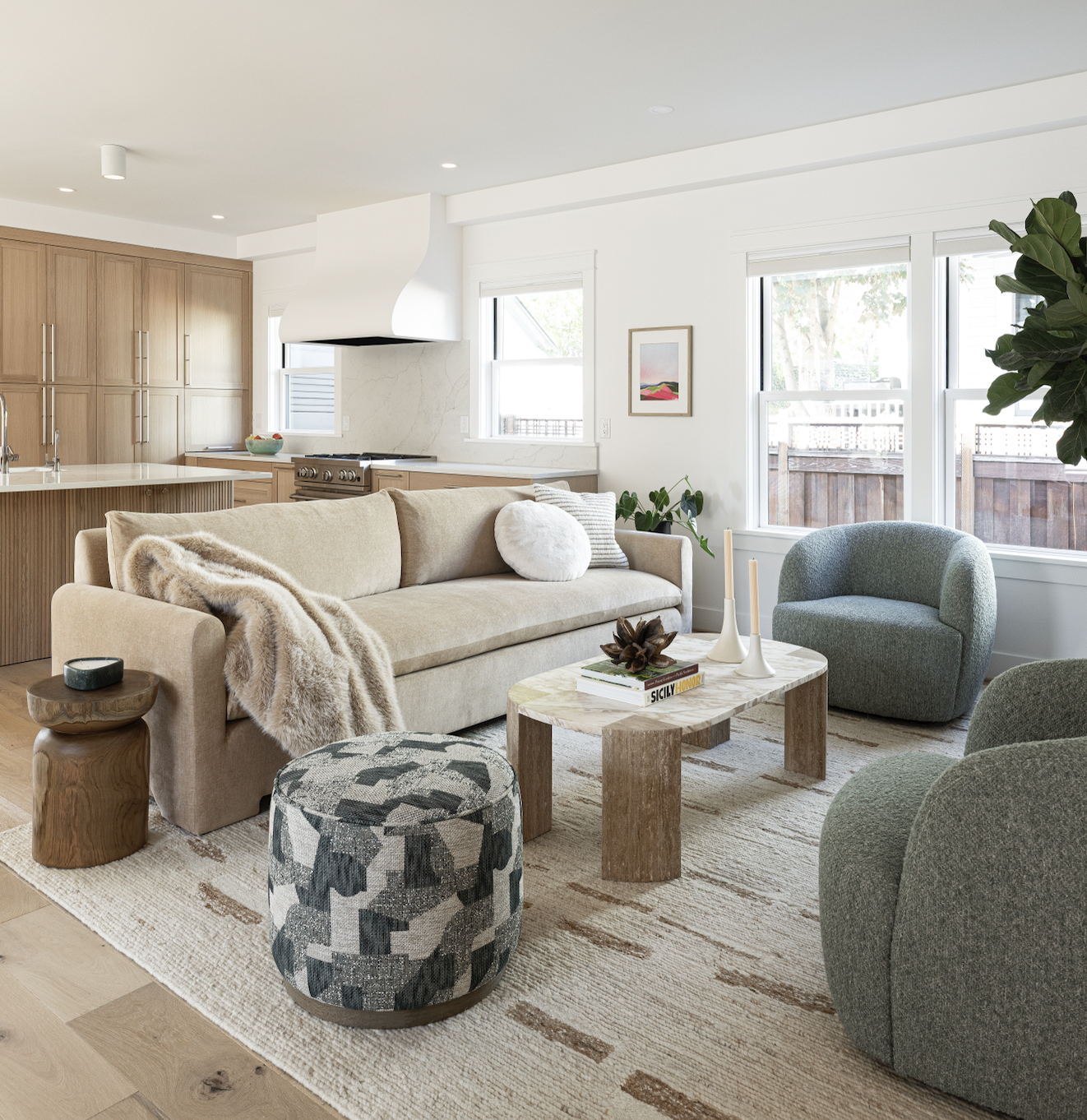
Our Firehouse project, where we carefully planned for both function and aesthetics.
We Walk Through This in Our YouTube Video
In our newest YouTube episode, Living Rooms That Actually Work, we use Floral Place as a real-life example of a small living room and show you exactly how we would approach fixing it.
Not a dramatic makeover.
Not unrealistic before-and-afters.
Not “just buy all new things.”
We show you the actual design process we use with clients — step by step.
If you’re stuck wondering:
How to arrange furniture in an awkward living room
Where your TV should go
How to make a small living room feel bigger
Why your house feels dark or disconnected
Start there. It’ll make everything else click faster.
The 3 Things Every Living Room That Works Gets Right
We cover a lot in the video, but everything comes back to three foundational design principles.
1. A Clear Focal Point: Every living room needs something to orient around.
Fireplace
TV
Windows
Built-ins
Yes, even the dog if necessary. (Kidding. Mostly.)
When furniture doesn’t know where it’s supposed to face, the room never settles. It feels slightly tense — and you can feel it even if you can’t explain it.
Choosing and committing to a focal point is the first step to fixing an awkward living room layout.
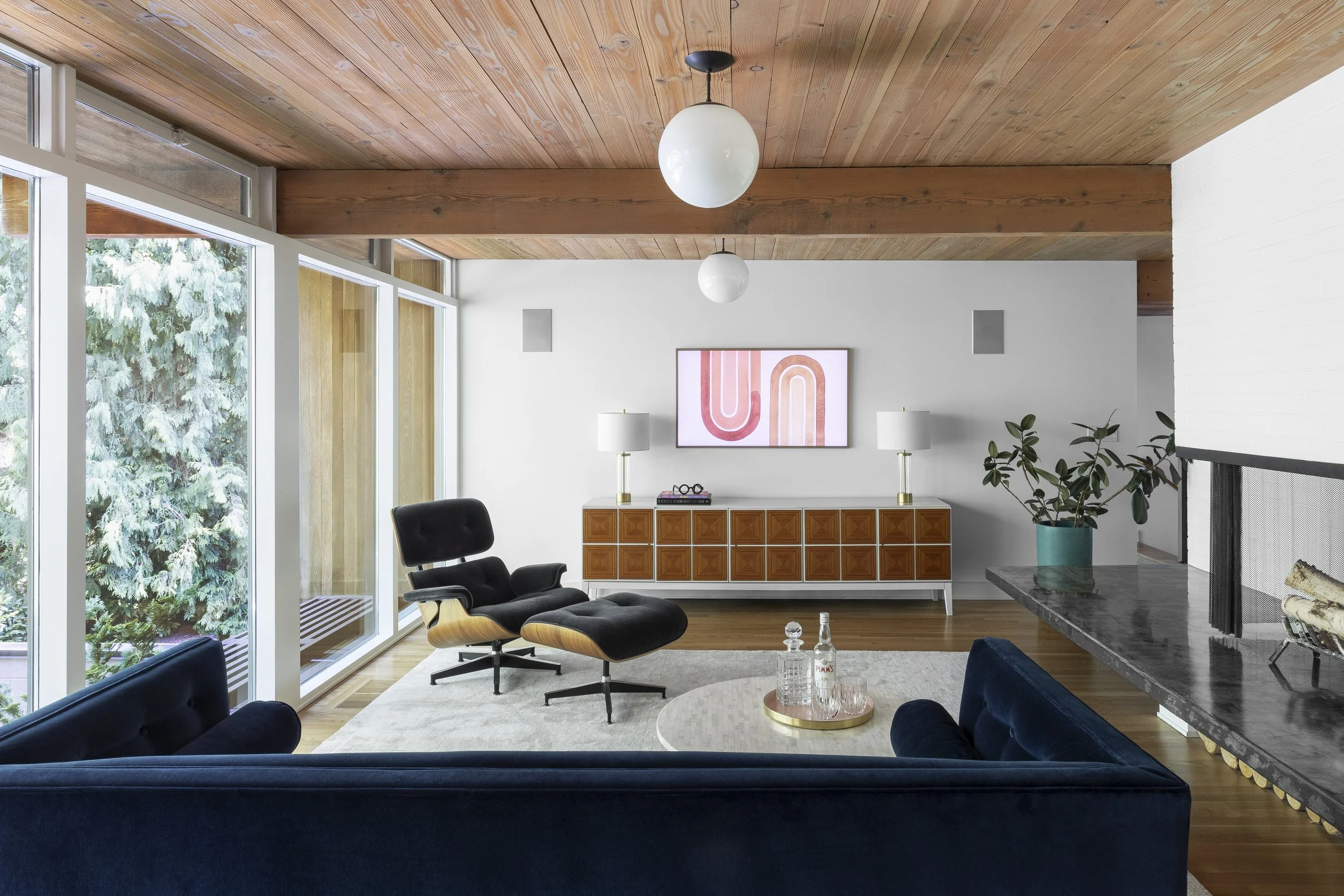
In our Lake Oswego Modern project the focal point is the frame TV.
2. Flow Is More Important Than You Think
If you’re constantly walking around furniture instead of naturally through the room, that’s a layout issue.
This is where measuring matters.
This is where taping out furniture on the floor matters.
This is where understanding walkways completely changes the game — especially in smaller homes.
Good interior design isn’t about filling a room.
It’s about creating space that functions.
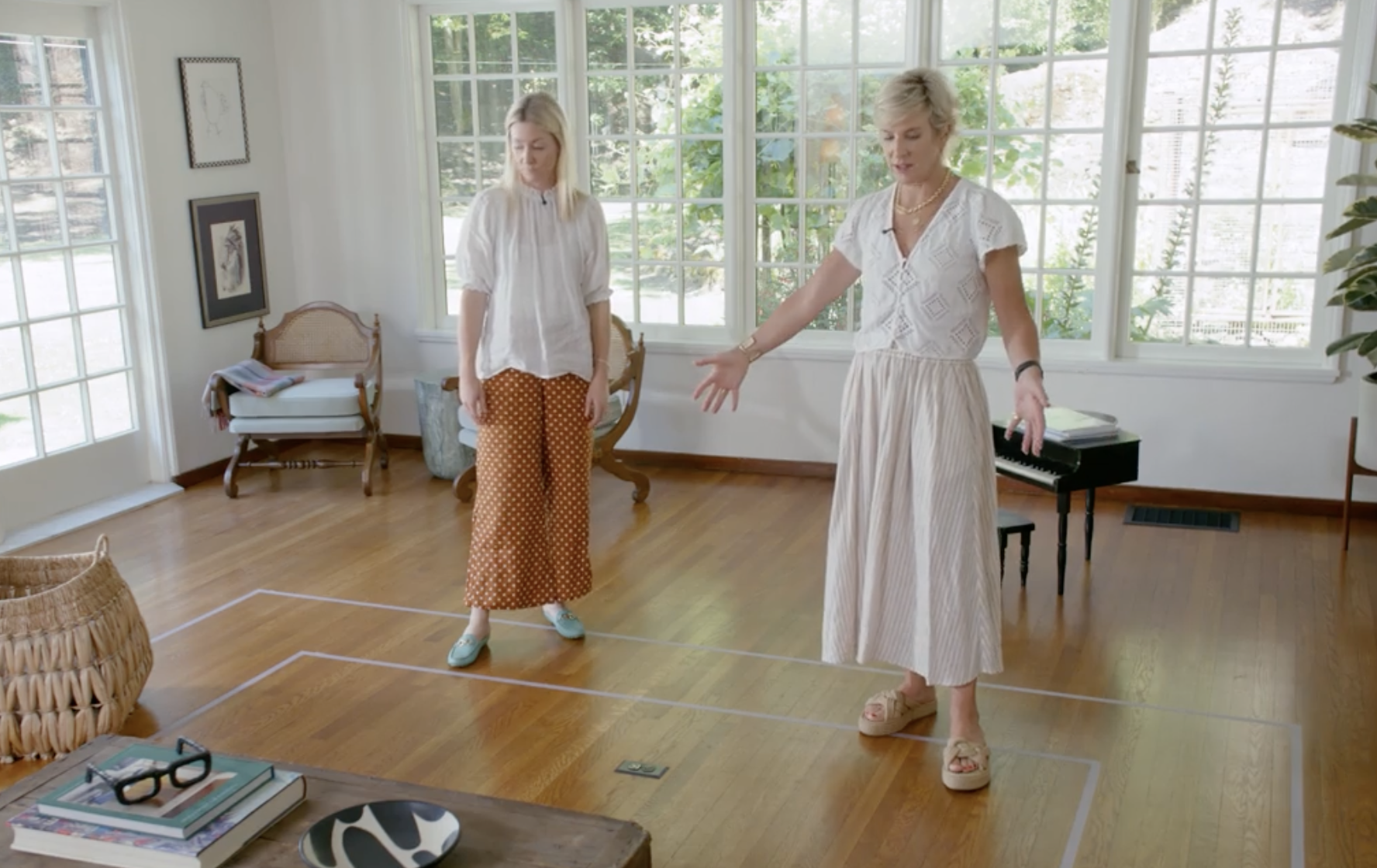
Taping out the living room at Westward Tudor before purchasing furniture.
3. Furniture Should Be Grouped — Not Floating
Chairs pushed against walls.
A too-small rug.
A coffee table stranded in the middle of nowhere.
When furniture floats without intention, rooms feel disconnected.
Intentional groupings create conversation, balance, and that pulled-together feeling everyone wants.
If you haven’t watched the video yet, start there. It will give context to everything we’re sharing here.
Why We Created the Living Room Guidebook
After years of client work, DMs, texts from friends, and comments, one thing became incredibly clear:
You don’t need more inspiration
You don’t necessarily need full-service interior design
You need a clear, step-by-step way to move forward.
That’s why we created:
From Stuck to Styled: The Living Room Guidebook
This is not a coffee table book.
It’s a working guide.
It’s interactive.
It’s practical.
And you don’t just read it — you implement it alongside us.
What’s Inside the Guidebook?
We built it exactly how we structure real client projects:
How to define how you want your living room to feel
Choosing and committing to a focal point
Understanding flow, walkways, and spatial planning
Rug sizing (yes, it matters more than you think)
Creating furniture groupings that make sense
Fixing scale issues that make rooms feel awkward
Adding lighting, texture, and styling after the layout works
Each step builds on the last so you’re never stuck asking:
“Okay… but what do I do next?”
It’s like having us in your living room — minus the blue tape and mild chaos.
We’ve also included links to additional videos if you want to go deeper on specific design topics.
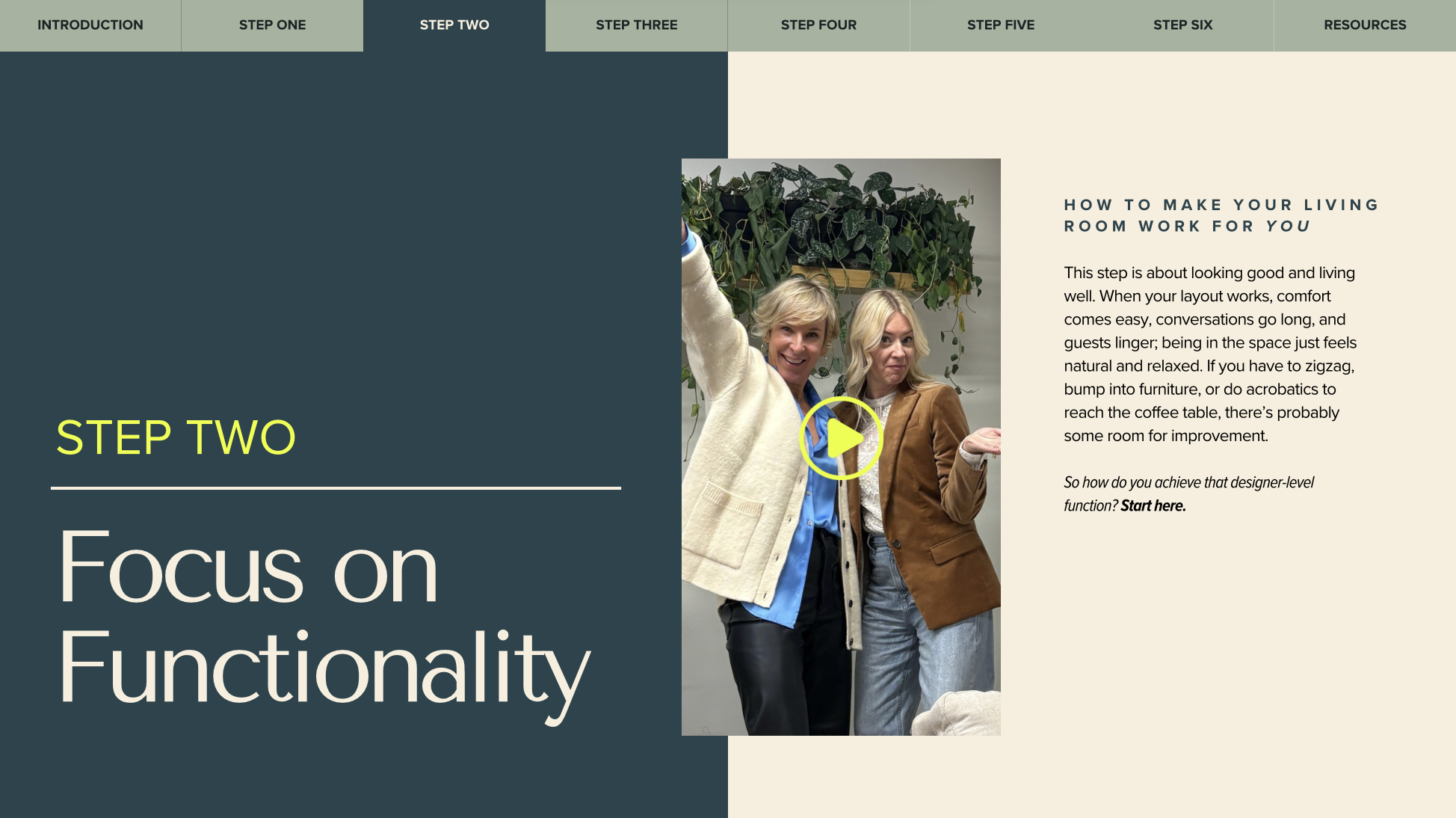
A sneak peek at the 40+ page guidebook we just released.
How This Fits Into What We’re Building in 2026
As we move into 2026, we’re getting more intentional about how we help busy homeowners who feel stuck.
Here’s what that looks like:
YouTube for teaching the real design process in action
This blog + Substack for deeper context and behind-the-scenes thinking
ShopMy to simplify product decisions without overwhelm
PowerHours + Client Services for personalized support — whether that’s a Shop the Look board, a live consultation, or a full construction project
And now, our Guidebooks — practical, affordable design tools that bridge the gap between DIY and luxury interior design
Because not everyone needs a designer full-time.
But almost everyone needs a better process.